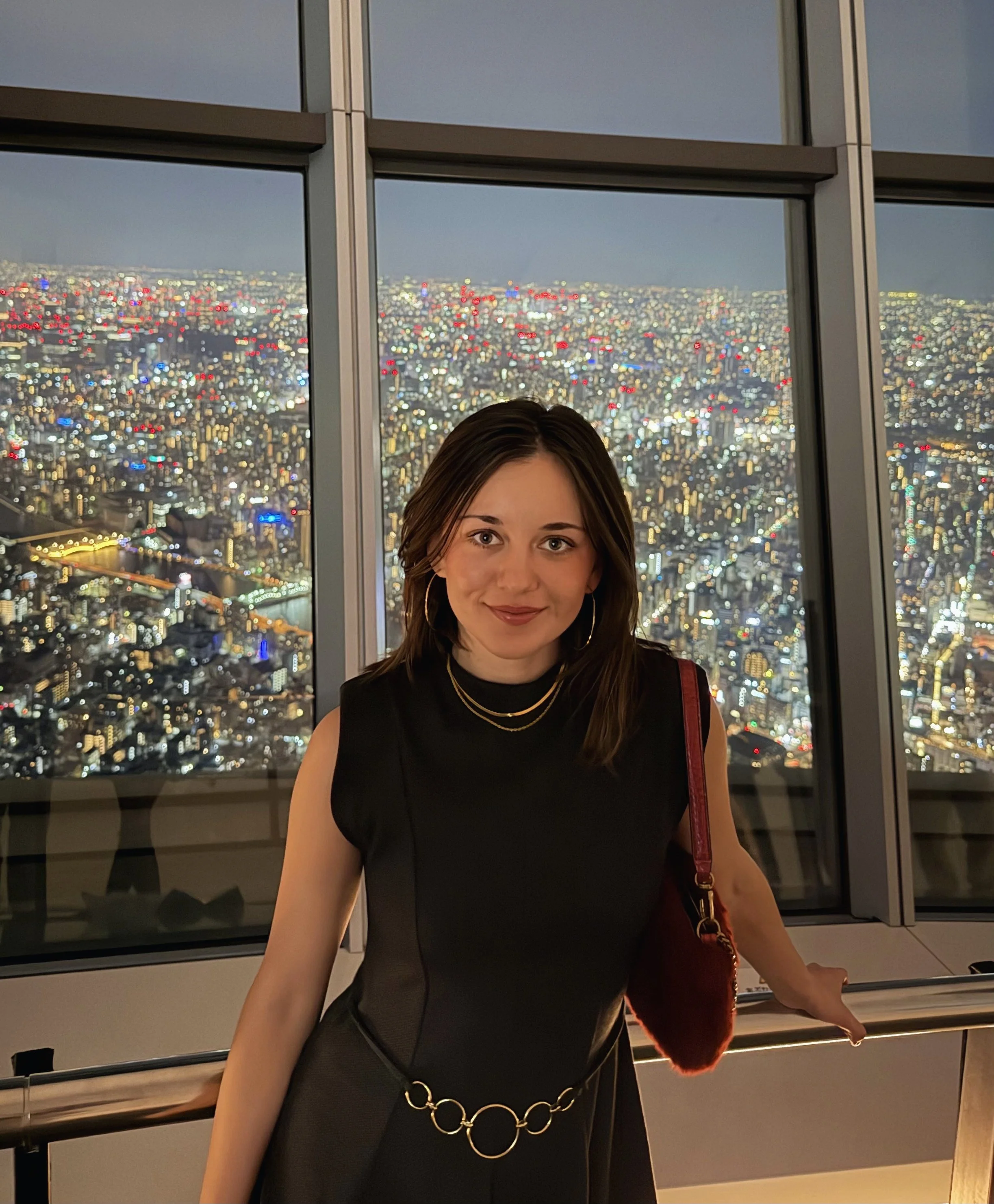
Cutting through the current - Meet editor Alexandra Savu
Two Minutes to Midnight, an interview to editor Alexandra Savu by Sharon Grace Badia.
Alexandra Savu started cutting films in Bucharest before most people her age had figured out what they wanted for lunch. She then crossed an ocean, picked up a BFA in Texas, ran sound on sets in Atlanta, chased light as a gaffer, wrote screenplays, directed, and somehow also found time to help shape the wild, wonderful chaos of BRAVO reality television at NBC Universal.
Today, she's based in Los Angeles, where she works as a marketing editor at AV SQUAD — a three-time consecutive winner of Agency of the Year — crafting the trailers and campaigns that make you sprint to the cinema or stay up way too late clicking play on a Friday night. In other words, if a film has made your heart race in a two-minute preview recently, there's a chance her fingerprints are on it.
She is an award-winning editor, a child of Romanian cinema, a veteran of the Hollywood machine, and living proof that the best storytellers are the ones who have done every single job on the call sheet at least once.
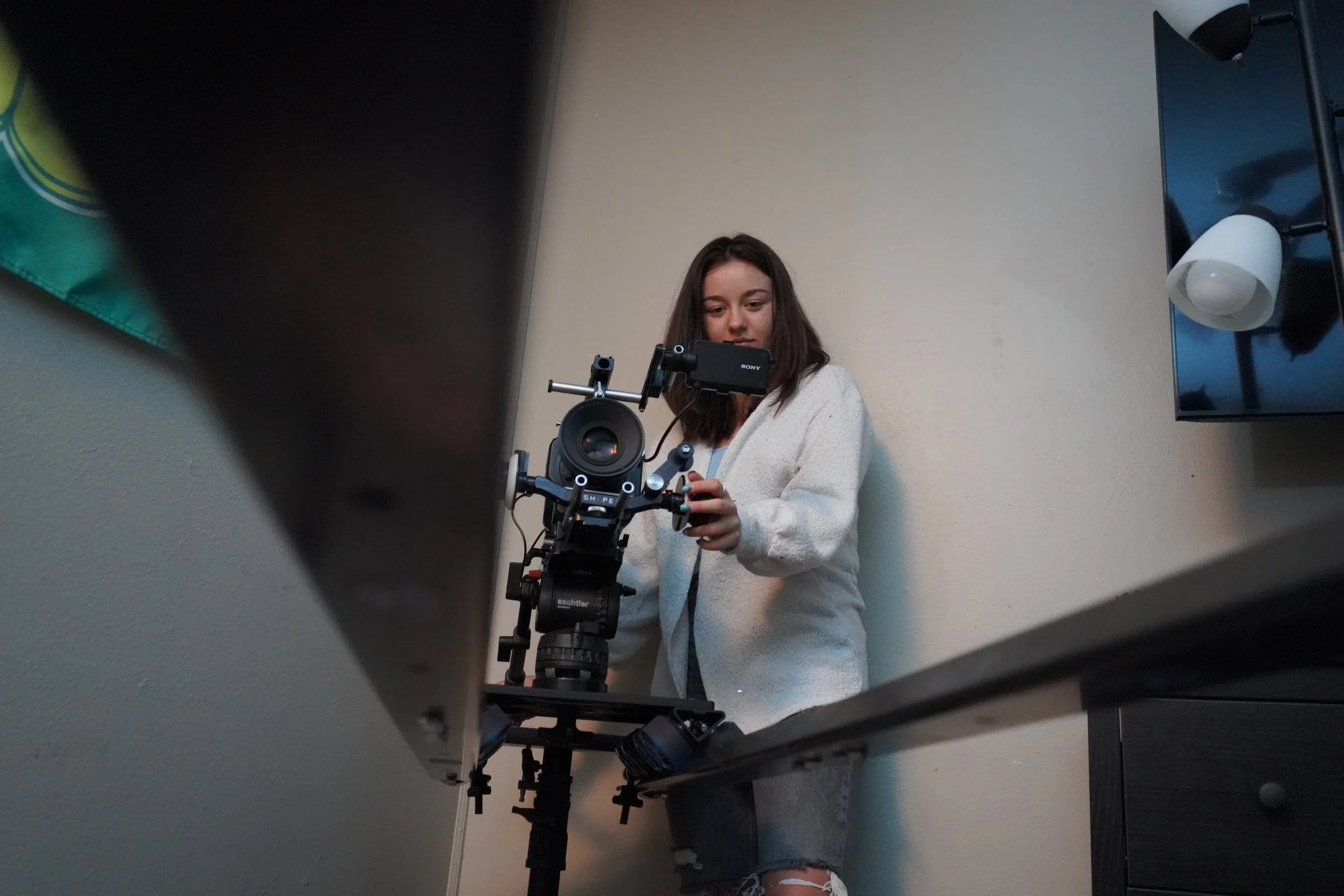
Editor and filmmaker Alexandra Savu

By Sharon Grace Badia
Published on June the 15th, 2026
‘Two Minutes’ is exactly what Alexandra Savu makes for a living: tiny, heart-racing love letters, each one just two minutes long.
Those two minutes are her canvas: the length of a trailer that has to reach through the screen, grab you by the ribs, and make you fall a little bit in love with a film you haven’t even seen yet.
And midnight? That’s the hour we all know too well, the Friday night when you swore you’d sleep early, but a preview whispered just one more, and suddenly the popcorn’s gone and the room is dark and you’re in.
It’s also the quiet countdown every editor feels ticking behind the footage: the deadline, the suspense, the thrilling urgency of a story about to break wide open.
But the real secret is the other love stories tucked inside that title, the romance between Alexandra and the footage, the crush an audience develops on a character in the space of a single glance, the lifelong affair she’s been having with cinema itself, from Bucharest to Los Angeles.
So before we dive in, know this: everything you’re about to read is, in its own way, a love story. And the clock’s already ticking.
Here's our top 10 questions with Alexandra
🐡
Here's our top 10 questions with Alexandra 🐡
10. You've worn pretty much every hat on a film set: director, DP, gaffer, editor, screenwriter, DIT. If you had to pick just one role for the rest of your career and burn the others at sea, which one survives and why?
A. Editing is the biggest passion of my life that brings me most excitement and self-discovery during the process itself, and most joy and fulfillment once the process is done and most.
I adore building the pieces together like an emotional puzzle, and the journey of going from analyzing raw footage to creating an art piece that will make people feel strong emotions is my dream job.
The directing done in post-production where editors guide audience’s attention has such a creative, emotional aspect to it that combined with all the intricate technicalities that go into post create a duality that always touched my heart.
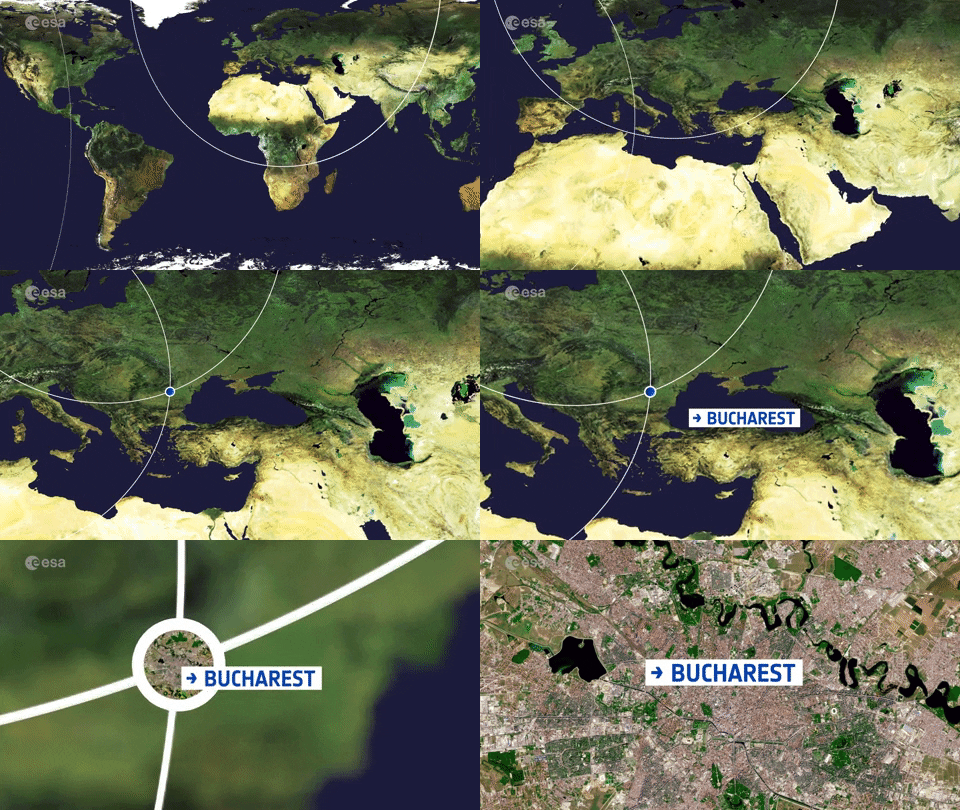
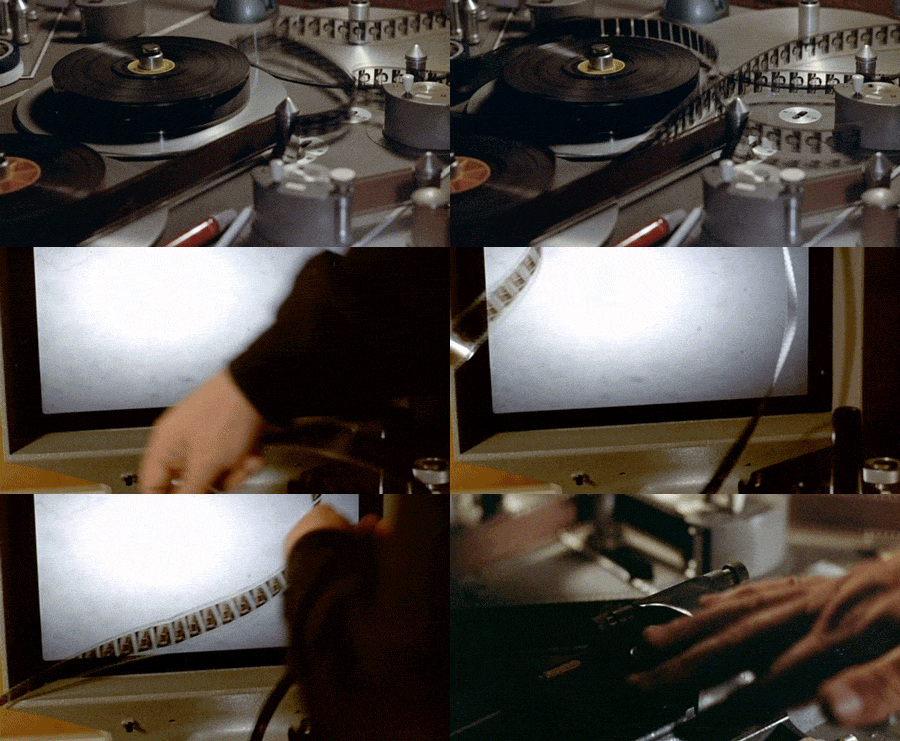
Q9: You grew up in Bucharest and started editing your first films there. What's one thing Romanian cinema taught you that Hollywood still hasn't figured out?
A. Romanian cinematography is about staying in the moment with the characters, feeling like you are right there next to them and getting so familiar with their behavior you can almost feel their breath.
It’s a much more introspective and reflective kind of filmmaking that could get audiences feeling uneasy at times, although this is intentional and very well created.
I would say Hollywood is intentionally relying more on storytelling and more complex plots rather than elongated scenes with complex set design where the audiences stay with the characters, not only because of bigger budgets, but also because production design and intense action are more typical in the US and driving the narrative forward rather than the typical Eastern European emotional conversations the characters have.
Q8: Trailer editing is its own dark art , you have roughly two minutes to make someone fall in love with a film. What's the first thing you look for when you sit down with raw footage and think, okay, here's the hook?
A. Trailer editing is definitely very different than longform editing, where in the latter you have an inherent consistency to follow, while for trailers that consistency needs to be re-created.
Personally, for short form promotional editing, I have developed a strong affinity for emphasizing the authentic nuances of the characters who are developing their arcs in the movies I am working on.
In all the short-form promotional spots I am cutting for the creative marketing campaigns of movies and shows, I try to present the public with a range of reactions and emotions for the lead characters so that there is a suspense and curiosity that grow for knowing more about the storyline of that characters.
I am really enjoying putting in the spotlight “good people doing bad things,” as the saying is, because it reveals unexpected situations that push us to the limits of our identity and force us to discover more about our nature.
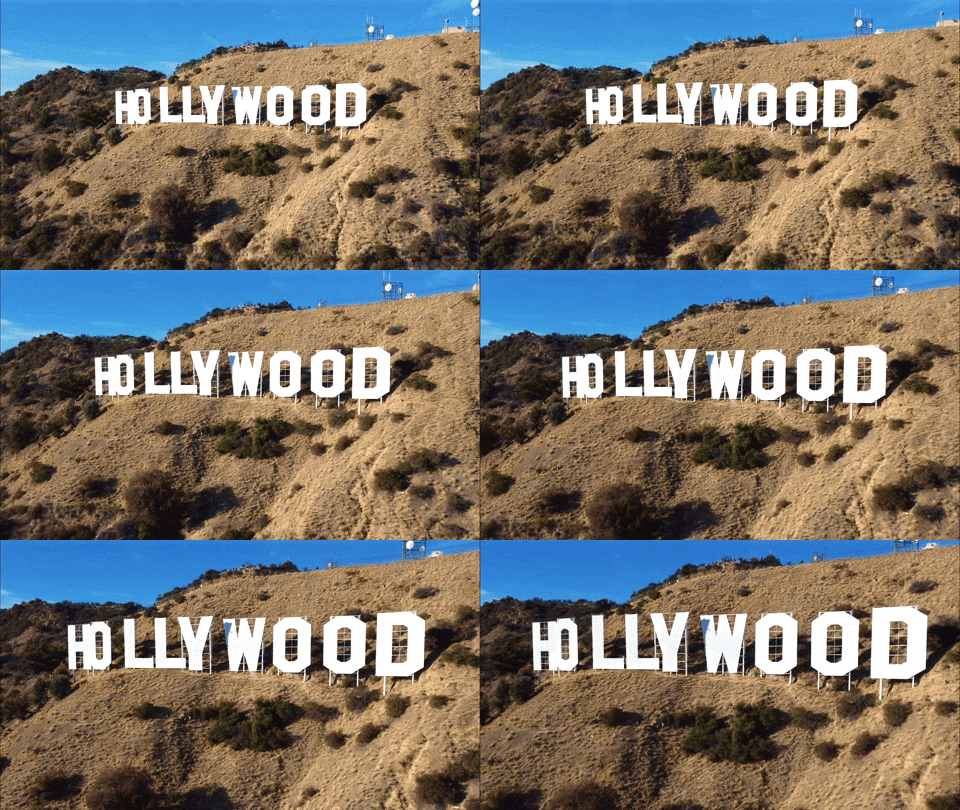
Q7: You've moved from Bucharest to Dallas to Atlanta to Los Angeles, constantly rebuilding your world and your career from scratch. At what point did you stop feeling like an outsider in the industry — or do you think that outsider perspective is actually something you protect?
A. I think there’s something beautiful about being an outsider in this crowded industry where everybody is fighting for a seat at the table.
Outsider perspective adds more authenticity and experience that could make you a more valuable asset in decision-making conversations, especially when Hollywood is creating art for audiences all over the world.
As I am working in Hollywood, I like to emphasize and take advantage of my international post-production experiences, achievements, awards, edited films, trailers, and music videos in order to incorporate broader perspectives that could benefit worldwide recognition. I happily protect my foreign identity that brings fresh creativity in the editing offices in LA.
Q6: Hollywood marketing is about selling a fantasy before the film even exists in people's minds. Have you ever cut a campaign for a movie you privately thought was a disaster, and if so, how do you find the truth in it?
A: That’s a wonderful question! I have and I figured out that for me, emotional intuition is the best in this kind of scenario because when you watch something, artistic ideas can hit you suddenly based on what emotional experience you are having, even if this experience could be very different than the core theme/idea of the movie.
A moment of inspiration is priceless because it gives you an editing direction to follow, especially when the movie’s storyline or style has not done much to help guide you towards something meaningful.
There are a few strategies that work for me. First, I always seek moments that create an emotional reaction for me, and I note them down so I could dive deeper into them later. Then, I keep in mind the saying "the more specific, the more universal”, meaning the more detailed the performances or stories I include in my spots, the more people can relate to the situations presented and the more emotionally involved they become.
Thus, revealing a short yet well cut, gripping, strong moment or series of moments increase suspense and curiosity in audiences to want to find out more about the movie, while still staying true to the source by having the emotional reaction coming from the film itself.
Q5: You've worked in both on-set and post-production worlds. Do directors treat you differently when they know you've stood on their side of the camera?
A. I would say they do; I’ve noticed a certain kind of comfort describing their vision of how the scenes that we are actively shooting would look like on screen, and a relief knowing they can lay out their ideas about how the moments in front of us would be put together as they are unfolding.
They appreciate the freedom to discuss their visions for the pace of a scene, the kind of emphasis or lack thereof they desire for certain characters, the intensity of a conversation, the brainstorming of a transition, the impact of a shot, all while the production is ongoing.
As art is being made, emotions are high and we can benefit off of their intensity to get more inspired. It’s a beautiful new language that shooting movies creates without planning it.

Q4: You analyze footage for a living, which means you probably can't watch movies like a normal person anymore. When was the last time a film completely shut your editor brain off and just got you?
A. It’s true, as filmmakers, working on movies does not allow you much to sit back and be a sole observer/viewer without doing some mental gymnastics figuring out the process behind the scenes.
It’s actually very fun! Especially if you’re watching next to someone else who is going through the same process.
However, I would say that Punch Drunk Love was a movie so loyal and committed to its theme and motifs through all the filmmaking elements (cinematography, production design, editing, sound, acting) that I did not think about editing much while enjoying it.
I just sat back and followed the main character’s story as it really felt like I could not tell what would come next, or the uneasiness of the situations he would put himself into would get me so intrigued or tense that I could not engage my editor brain while getting swamped by the emotions I was feeling.
This discomfort that is created by actors being so genuine and dedicated to their role is quite magical. It feels like you’re there with them and all you care about is their next move. I loved it!.

Q3: The Kraken Film Festival celebrates bold, boundary-pushing filmmaking. What's a creative risk you took on a project that made everyone in the room nervous? And did it pay off?
A. I think the editing overall of my narrative movie “Love in the Evening/Morning” was definitely a creative, risk-taking process that I will forever cherish not only because of how rewarding that experience was and how big the payoff was from taking all this risks and imprinting my authentic self during the creation process, but also because of how empowering it felt to let yourself be carried away by the footage and to let it speak to you. I was editing the movie completely by myself, which meant I was asking for lots of feedback and review sessions with other heads of departments for this project to keep myself in track. However, a decision I made alone and stood by it until the end that, now looking back, feels amazing, is creating an opposition between the black & white LUTs with fast cutting suggesting the lovers’ naïve joy and youthful yet immature love story against the color LUTs with slow editing and minimal dialogue to emphasize the growth and gained maturity of the characters. I am very happy about how I built the editing style around this opposition.
Q2: If you could go back and edit one classic film differently — not because it's bad, but just because you see another version living inside it — what would it be?
A. It’s hard to answer this because I always have a goal to learn from every movie I watch, thus my mindset is to grasp as much information from the art I see as possible.
However, maybe I would have tried a different editing approach for Dr. Strangelove. I would have maybe tried to make the editing more fast paced, certain scenes more cutty, so that the adrenaline of the scenarios involving the Cold war nuclear bombing could be more emphasized in the cutting style.
I would have tried to show a wider variety of reactions while the paranoia of the USSR attack is being revealed, but at the same time, the way the movie was edited, with intentional overdramatic beats, is very aligned with the dark comedy and political satire genres.

Q1: The industry is shifting faster than ever (AI tools, streaming wars, shrinking theatrical window). When you picture where filmmaking and post-production are headed in the next ten years, does it excite you, terrify you, or is it a little bit of both?
A. I think it’s a little bit of both, there are great uses of AI but also harmful ones where it whether improves efficiency or creativity is diminished, so not sure which direction the pendulum will swing on this chapter in a few years, yet I am hoping the decisions will be taken in consideration with all entertainment workers’ benefits in mind.
Also, for creative marketing, I believe entertainment is heading towards creating social media spots more than the classic TV ones that have been the bulk of movie marketing for a long while, yet the digital world is always so exciting and fresh to explore.
I am deeply hoping that the cinema experience will stay alive because of how unique and moving it has always been to share watching a movie with large audiences around. But all I truly know is that if all artists remain true to their art amid all the inevitable changes, the industry will evolve authentically and excitingly!
So here's to the woman who builds heartbeats in two minute bursts, stitching starlight and shadow into a rhythm that follows you all the way to the ticket line.
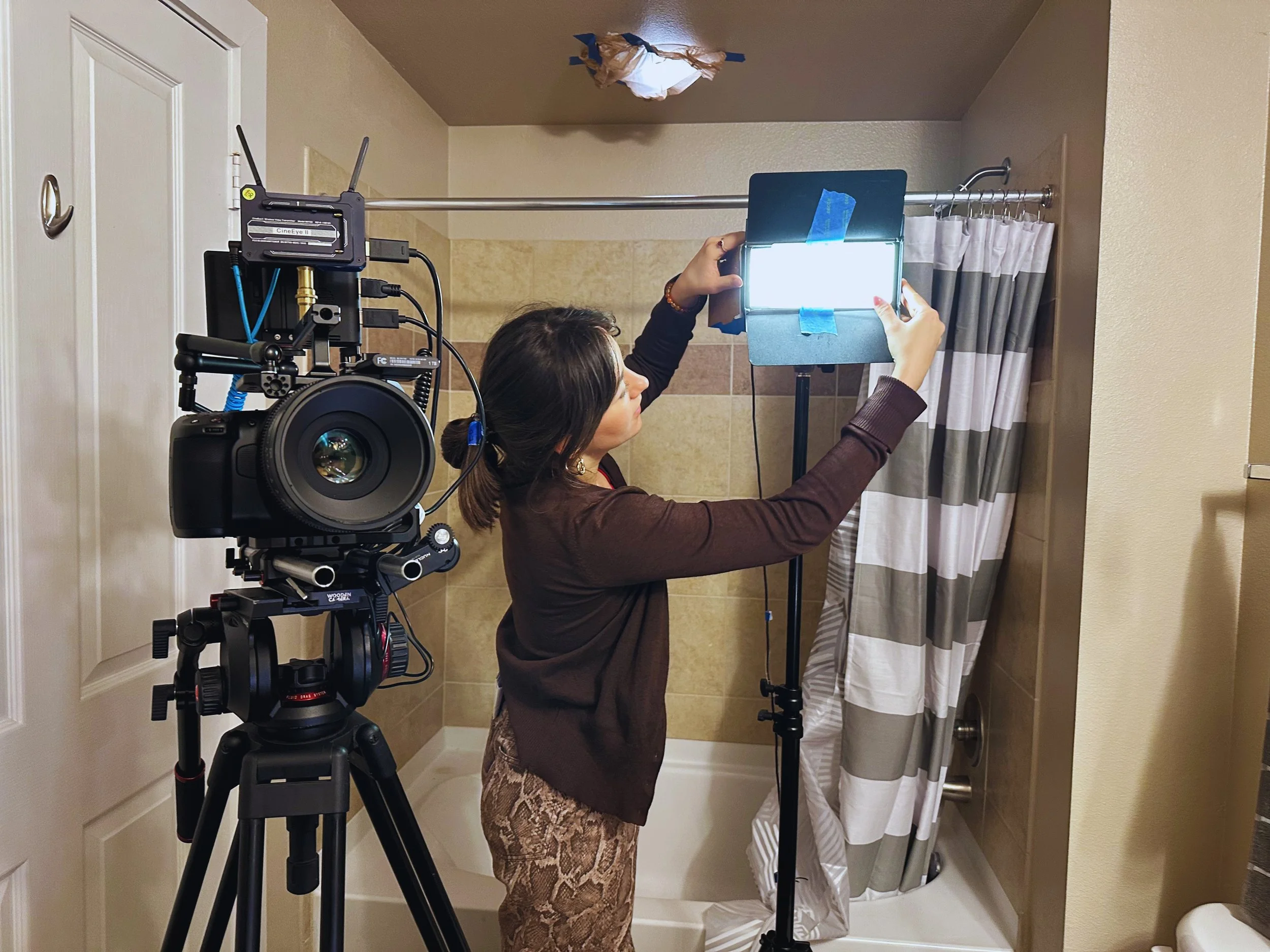
Alexandra Savu on a set